

Eco-Friendly Sunglasses Manufacturer — Real Materials, Real Proof
We’re an eco sunglasses manufacturer that believes sustainability only works when the product survives the real world. Pretty slides don’t keep frames out of landfills; good design and honest materials do. If you need a hands-on sustainable eyewear supplier who can build bio-acetate collections, recycled nylon sport lines, and FSC-certified packaging without the greenwashing, you’re in the right workshop.
Why Eco Matters (And Why We Avoid Hype)
I used to think “eco” was a marketing word. Then we tracked returns across three seasons. Frames that were easier to repair stayed with customers longer. Packaging that fit tighter pallets cut freight emissions more than any poster could. The lesson: the greenest frame is the one that stays in use—longer.
We map decisions from resin to retail: materials, machining, coatings, assembly, and packaging. Some choices are counterintuitive. A lighter, tougher nylon frame may beat a heavier bio option if it doubles the product life. This isn’t a purity contest; it’s practical sustainability.
For circular principles we often cite the Ellen MacArthur Foundation. For market data, The Vision Council is a solid read.

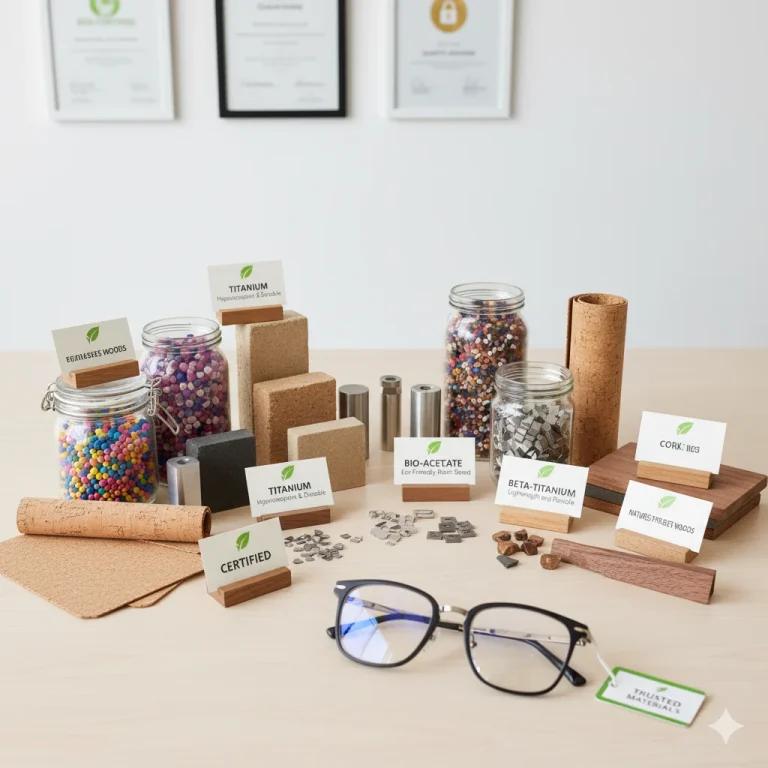
Materials We Trust (And the Traps We Avoid)
Bio-acetate: Beautiful hand-feel, polishes like a dream. Needs pre-drying to avoid micro-bubbles during edging. We source from long-term partners and keep colorways tight to control batch drift.
Recycled nylon: Great for sport frames. Strong, light, and flexible. The catch is color stability; we lock master batches and test under UV to reduce fade.
Ocean-plastic blends: Powerful story, real engineering. On its own, ocean plastic can be brittle. We blend carefully with virgin resin to reach target impact strength. We’ll tell you the ratio and why.
Recycled stainless & titanium: Hinges and cores are quiet heroes. Recycled alloys cut footprint without killing durability. We ultrasonic-clean parts before assembly to avoid corrosion surprises.
Bamboo & wood accents: Only with FSC sourcing and sweat-proof sealing. Looks natural; performs best as an accent, not a full frame for humid climates.
Curious about the chemistry and coatings? Dive into Materials & Technology for a practical breakdown.
What’s Hard About Eco (The Workshop Version)
Eco materials don’t care about your launch calendar. Humidity swings make bio-acetate moody. Recycled nylon hides color specks if you rush drying. Early on, we tried a “perfectly green” temple blend that looked great in daylight and turned dull under store lights. Ouch.
Now we run environmental chambers, slow polish cycles, and stricter incoming QC. We also add micro design tweaks—vent slots for fog control, thicker bosses for screw retention, and modular hinges for easy repair. Less breakage means fewer replacements. That’s eco too.
“Sustainability is not a feature; it’s a system.” — a note taped above our polishing room.

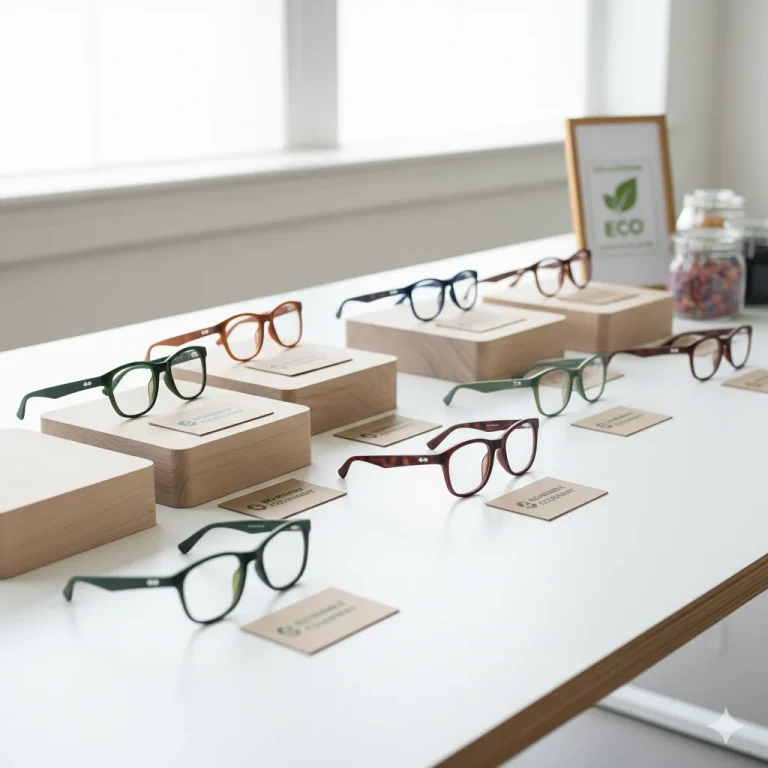
Color, Finishes, and the Honest Palette
Eco doesn’t mean earthy beige forever. It means honest colors that age well. We focus on palettes that hide small scuffs and love daylight: moss green, slate, sand, amber tort, ink blue. Low-VOC coatings protect without toxic smells. On metals, we prefer PVD over paint for durability and fewer touch-ups.
Mirror tints are cool, but we keep them thin and responsible. Back-side AR reduces ghosting. If you need polarized mirrors, we’ll confirm the stack won’t tank efficiency. Details matter when customers wear frames daily, not just for photos.
Beyond Frames: Packaging, Freight, and the Boring Stuff That Moves the Needle
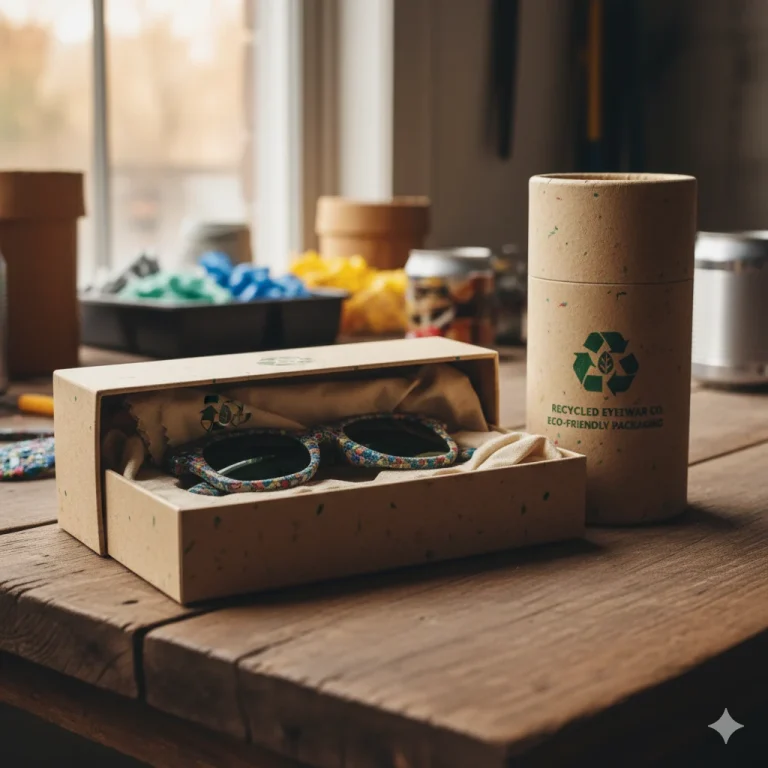
We cut plastic from boxes, moved to recycled paper, and switched to molded pulp trays. Inserts use soy inks. QR cards replace thick brochures. Pallet density improved by 18% on a recent run—less air shipped, fewer cartons tossed.
If you need chain-of-custody and recycled content claims, we align with GRS and OEKO‑TEX where relevant. We publish certificates on Quality & Certification.

Proof, Not Promises
We document the boring things: batch numbers, resin origins, coating MSDS, salt-spray hours, UV tests. When a retailer asks for proof, you’ll have a tidy folder ready. We also track repair rates and part availability. If a temple snaps in season two, a spare should be a click away—not a headache.
We can support light LCA modeling and help you choose the biggest wins for your audience. Sometimes it’s material choice. Sometimes it’s packaging. Often it’s designing for serviceability so frames stay in circulation longer.
Curious how this plays out in different regions? See Where Are Good Sunglasses Made? for supply perspectives.
Two Short Stories From the Line
Story 1 — Recycled Nylon Trail Series. A European outdoor brand came in hot: recycled content target, strict weight, and a no-fog promise. First pilot fogged on humid climbs. We added micro vents behind the brow, changed pad geometry, and extended the lens bevel. Fog dropped, weight stayed on target. Sell-through beat forecasts by 22%.
Story 2 — Bio-Acetate Heritage Edit. A boutique label wanted classic silhouettes with modern ethics. Early batches showed color drift under retail LEDs. We standardized master pellets and tuned polish cycles. What shipped looked calm and consistent—exactly what their audience wanted.
More examples live in Case Studies. We show the messy middle, not just the finale.

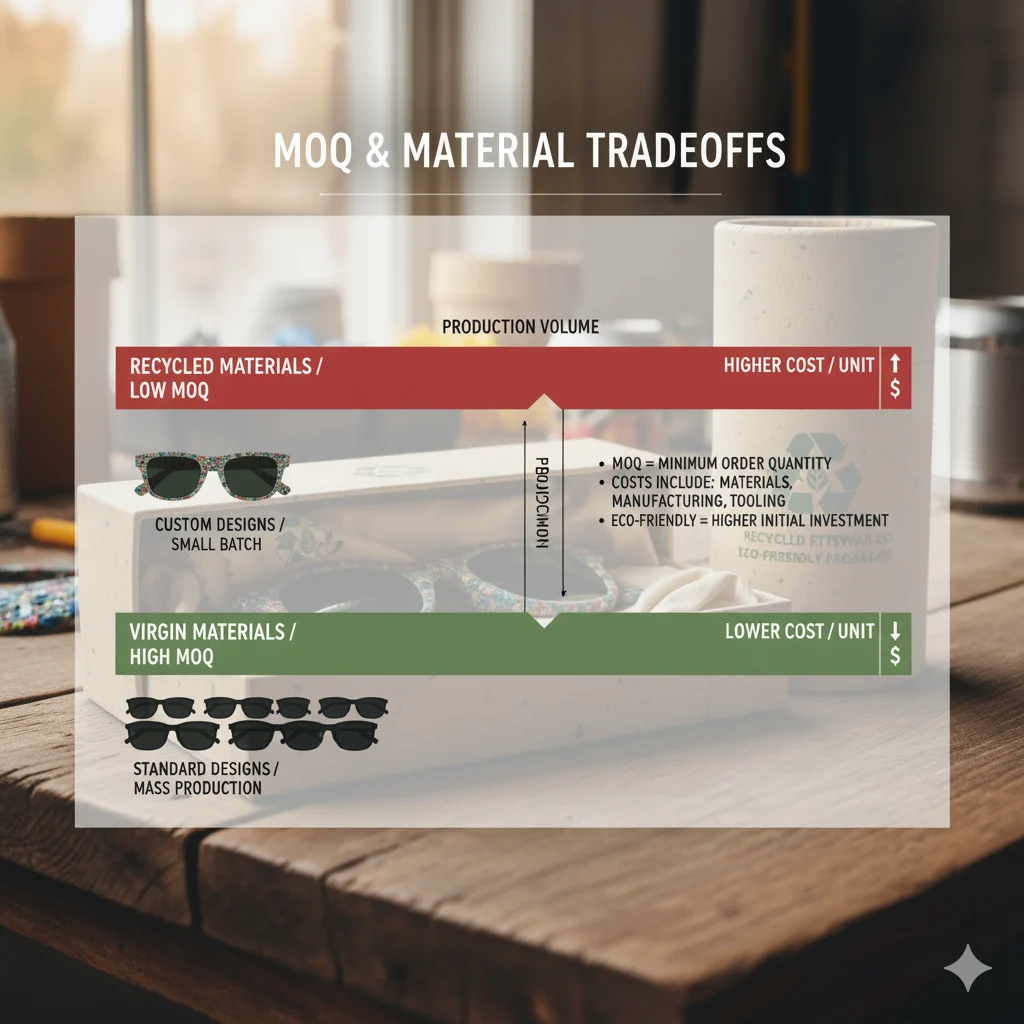
Costs, MOQs, and Trade-Offs (Let’s Talk Like Grown-Ups)
Eco materials can cost more. Not always, but often. The trick is designing smart so the total program is healthier: fewer returns, longer life, simpler service, tighter packaging. Start with a focused palette and two hinge systems. Add one hero color. Keep SKUs lean while you learn.
Pilots often begin at a few hundred units per color. If you need to test faster, we can mix materials across a shared BOM. For private label support, this page helps: Private Label Sunglasses. If you’re launching your first eco line, read How to Start Your Own Sunglasses Brand for a grounded checklist.
Designing for Repair (The Greenest Feature You Can’t See)
We design parts to be replaceable: standardized screws, modular hinges, accessible pads. A small part swap can save a pair from the trash. For retailers, we keep spare kits on hand—tiny envelopes that prevent big returns.
We also document how-to steps with photos. Customers appreciate a 60-second fix video more than a 600-word warranty policy. Less friction. Less waste.

What’s Next: Bio Innovation, Smarter Coatings, Quiet Electronics
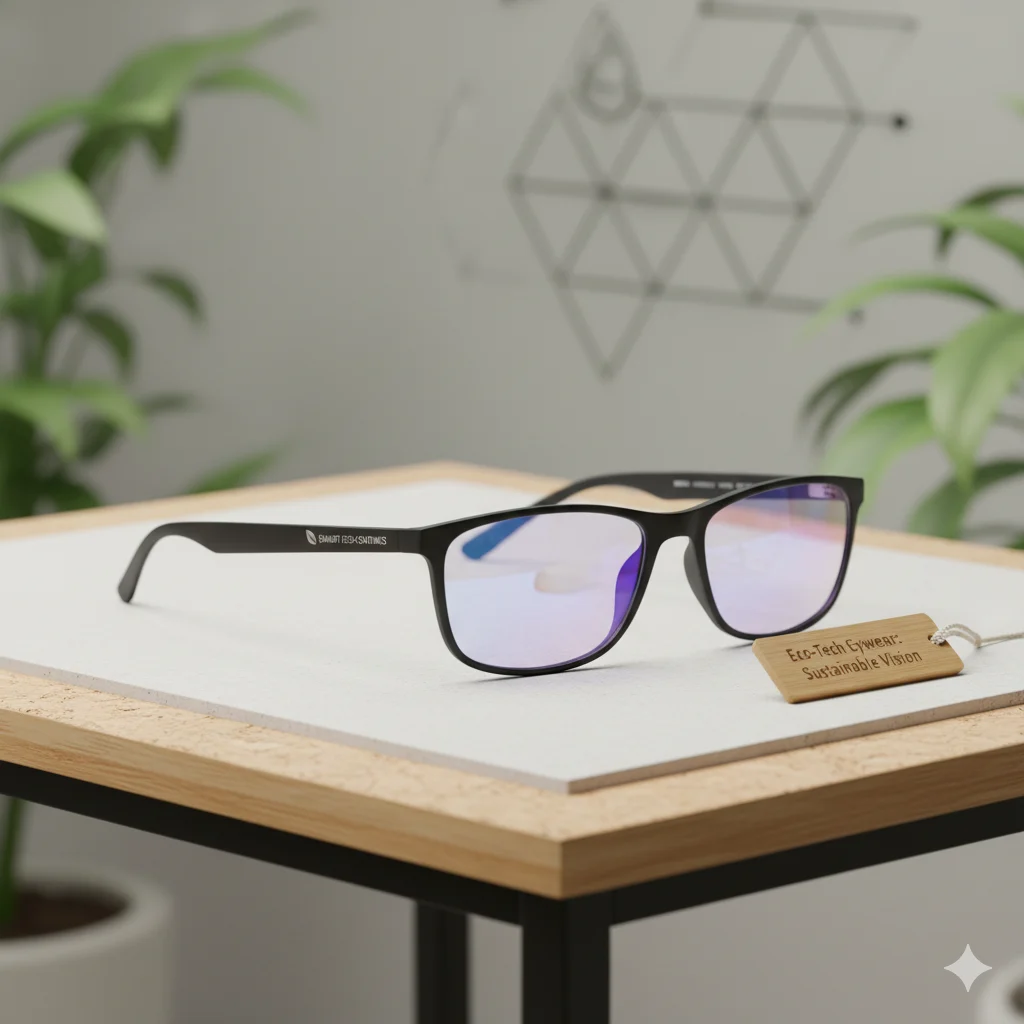
We’re watching bio-based resins evolve—stronger, more temperature-stable, easier to color match. Coatings are getting greener, too: lower-VOC, tougher in abrasion tests. And there’s a quiet frontier where sustainability meets smart features: low-energy audio cues for accessibility, touch controls with minimal added mass. If you want to experiment without gambling a season, we can run small pilots through our Custom Service.
For bigger-picture sustainability updates, check WWF and EMF. For market behavior, see The Vision Council.
Regions, Compliance, and the Paper Trail
Different markets ask different questions. The EU wants documentation on recycled content and REACH. The U.S. asks for impact tests and FDA guidance. Some retailers want LCA summaries and packaging specs. We keep templates ready so your launch doesn’t stall on paperwork.
If you’re new to cross-border manufacturing, this overview helps you understand regional strengths. We’ve shipped globally enough to know where the bottlenecks hide.

Start Smart: The Eco Line Starter Kit
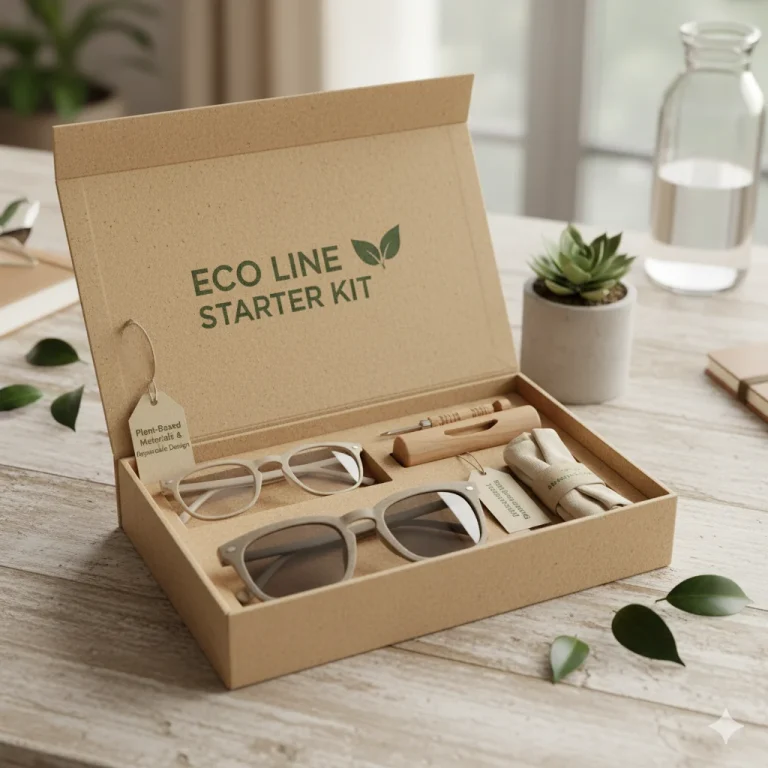
- Pick two materials (e.g., bio-acetate + recycled nylon). Keep learning focused.
- Lock a calm palette (3–5 colors) that works across seasons and hides scuffs.
- Choose one hinge family with spare kits defined upfront.
- Define claims (recycled %, certifications) and gather proofs early.
- Pilot test with real users—sweat, salt, backpacks, kids. Brutal is good.
- Tune packaging for density and unboxing. FSC paper, molded pulp, QR manuals.
Need a sparring partner for the plan? That’s what we do as a sustainable eyewear supplier—make trade-offs visible so you can choose with confidence.
What You Get Working With Us
- Real materials, documented and repeatable.
- Designs that survive backpacks, beaches, bike commutes, and dish-soap cleaning.
- Certifications and test data ready for buyers and audits.
- Repair-minded construction and spare parts.
- Clear talk and workable MOQs—no mystery fees, no vanishing timelines.
Our job is simple: build eyewear people keep. That’s the most sustainable thing we can do.

Looking for an Eco Sunglasses Manufacturer?
Tell us your goals, claims you want to make, and where your customers live. We’ll help you build eyewear for that world—responsibly.