
The first time I walked into a sunglasses factory, I almost walked back out. The air smelled like acetate and varnish. Think nail polish remover, but stronger. It hit the throat a bit. Machines were running everywhere. A saw cut through titanium in the back, loud enough to shake the floor. Nothing about it felt clean or polished. It was noisy, messy, almost uncomfortable.
But this is where sunglasses get made. Or at least, that’s what people say.
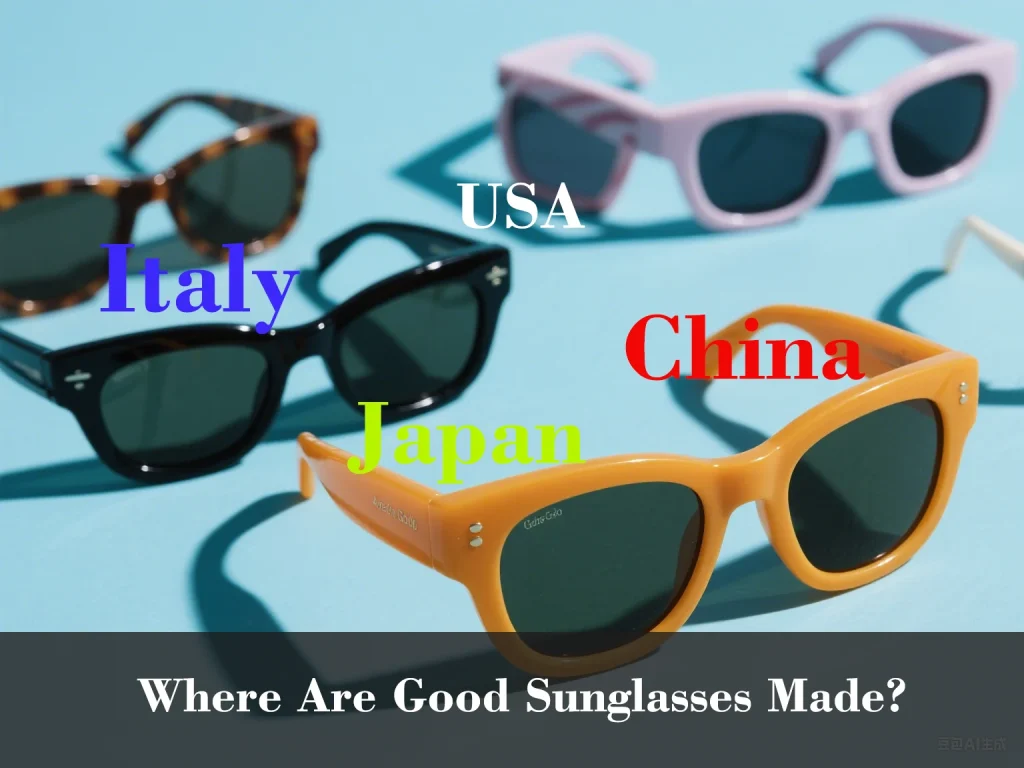
We like to picture Italian artisans in quiet rooms. Sunlight. Slow work. Maybe a glass of wine nearby. Or Japanese craftsmen bending titanium like it takes no effort at all. Some of that is true. Some of it isn’t. The reality sits somewhere in between, and it feels less romantic.
The Myth of Italy’s Fashion Perfection

I’ll start with Italy, because that’s where most stories start. “Made in Italy” still sells an idea—luxury, taste, design.
But I’ve been inside those factories.
One time in Belluno, I walked through a plant that made frames for well-known brands. Inside one hall, workers polished frames by hand. Right next to it, machines ran the same kind of work at scale. Same materials. Different output speed.
One worker looked at me and said, half joking:
“Here we make dreams. Next door, we make margins.”
That line stayed with me.
Later I asked a manager about cost. I didn’t get a detailed answer.
He just said, “It depends how you define cost.”
Someone else answered more directly over coffee:
“If we build the same frame in Asia, it drops to maybe two or three dollars. Here, it’s easily three times that.”
Same frame. Same idea.
Different system behind it. Depends who runs it—and why.
Japan: Precision, But at a Price
The first Japanese titanium frame I held felt almost weightless. I thought it would bend easily. It didn’t.
The craftsman watched me and laughed.
“Try harder,” he said.
I did. Nothing moved.
Japan builds precision into everything. But I noticed something quickly—it doesn’t scale easily.
A frame that Japan produces can cost several times more than a similar-looking frame from a large-scale Asian factory.
I asked why.
The answer came simple:
“We don’t rush production.”
That sounds good. And it is. But when you think about volume, it changes everything.
You don’t really feel that difference until you try to repeat the order a few times. Then it becomes obvious.
America: Stubborn, Very Stubborn

America builds sunglasses with a different mindset.
I met a guy named Jim in Massachusetts. He made aviator frames in a small workshop. He called me more than once about the curve of a temple arm. Not the whole frame. Just one curve.
“If that angle is off, it won’t sit right,” he told me. “It has to match Air Force specs.”
He didn’t compromise.
That’s the point.
But that level of control costs money. A lot of it. Labor goes up. Time goes up. And scale becomes harder.
You pay for precision, but also for the refusal to simplify.
China: The Elephant in the Room
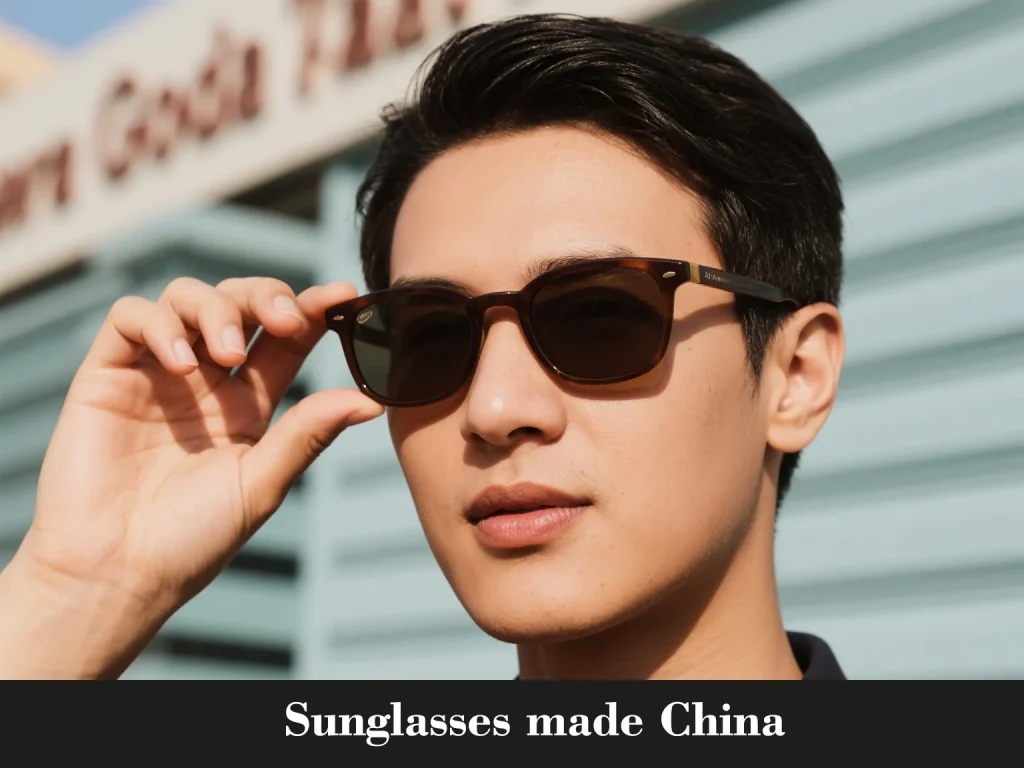
Most brands don’t say it out loud, but they rely on China.
Even brands that promote “Made in Italy” often source parts—hinges, screws, acetate sheets—from Chinese suppliers.
People call it cheap. That’s not accurate.
I’ve walked through factories in China where a single production line handles cutting, polishing, assembly, and packaging in one flow. No delays. No handovers.
Everything moves.
One engineer told me something simple. He didn’t explain it much.
“If something slows down, we just build the machine.”
That’s when I understood the system.
It doesn’t just reduce cost. It removes friction.
If you’ve ever worked with production at scale, this starts to make sense: sunglasses manufacturer
And when friction disappears, pricing becomes stable instead of unpredictable.
A Few Industry Secrets No One Talks About
Countries don’t really define products.
Supply chains do.
A frame labeled “Made in Italy” might include Japanese titanium, German lenses, and Chinese hardware. That’s normal in this industry.
Luxury branding doesn’t always match optical performance. I’ve tested expensive sunglasses and cheaper ones. Same UV protection in many cases.
You often pay for positioning, not function.
Even heritage brands outsource more than they admit. I visited one that talked about tradition all day. Behind the showroom, I saw boxes labeled “Shenzhen.” No one made a big deal out of it.
Challenging the Usual Narrative
People like simple answers.
Italy = fashion
Japan = precision
USA = durability
China = cheap
But it doesn’t work like that.
Italy also produces industrial-scale goods.
Japan also struggles with cost.
America also imports heavily.
China also produces high-end precision work.
The reality overlaps.
It depends on the factory, not the flag.
What Really Matters When Choosing Sunglasses
Ignore the label for a moment.
Look at:
- how stable production stays over time
- whether the same quality repeats
- how the supplier handles scale
Because in real sourcing, consistency matters more than origin.
If you’ve ever worked with suppliers directly, you start to notice something.
Same product. Same spec. Different results.
That’s not about country. It’s about system control.
If you’ve tried to import sunglasses from China, you probably already saw this in action:
You don’t really understand it at first. It takes a few cycles.
Closing Thought
When you see “Made in Italy” or “Handcrafted in Japan” printed on a frame, don’t take it at face value.
Think about the factory floor instead.
The smell of heated acetate.
A technician checking alignment again.
A machine running longer than expected.
A supplier adjusting output mid-order.
And somewhere in China, an engineer quietly tuning a production line so it runs smoother next time.
That’s where sunglasses actually get made.
Not in one country. Not in one style.
But in a series of decisions that look small on their own.
And maybe that’s the only honest answer I’ve found.
Or at least… the closest one so far.