In the global eyewear supply chain, the line between “budget-friendly” and “low-quality” is often blurred by clever marketing. For professional B2B buyers, distributors, and brand owners, the ability to physically and technically audit a sunglasses manufacturer is a vital skill. In 2026, where consumer awareness is at an all-time high, a single batch of brittle frames or distorted lenses can destroy a brand’s reputation overnight.
At Alfoptical, we believe that quality is not a subjective feeling—it is a measurable set of engineering standards. This comprehensive 1,500-word guide serves as your technical manual for identifying high-quality sunglasses, ensuring your inventory meets international safety and durability benchmarks.
I. Material Science: The Molecular Foundation of Frames
The durability of a frame starts at the raw material stage. Many factories cut costs by mixing virgin resins with “regrind” (recycled scrap), which significantly compromises the polymer chains and leads to spontaneous cracking.
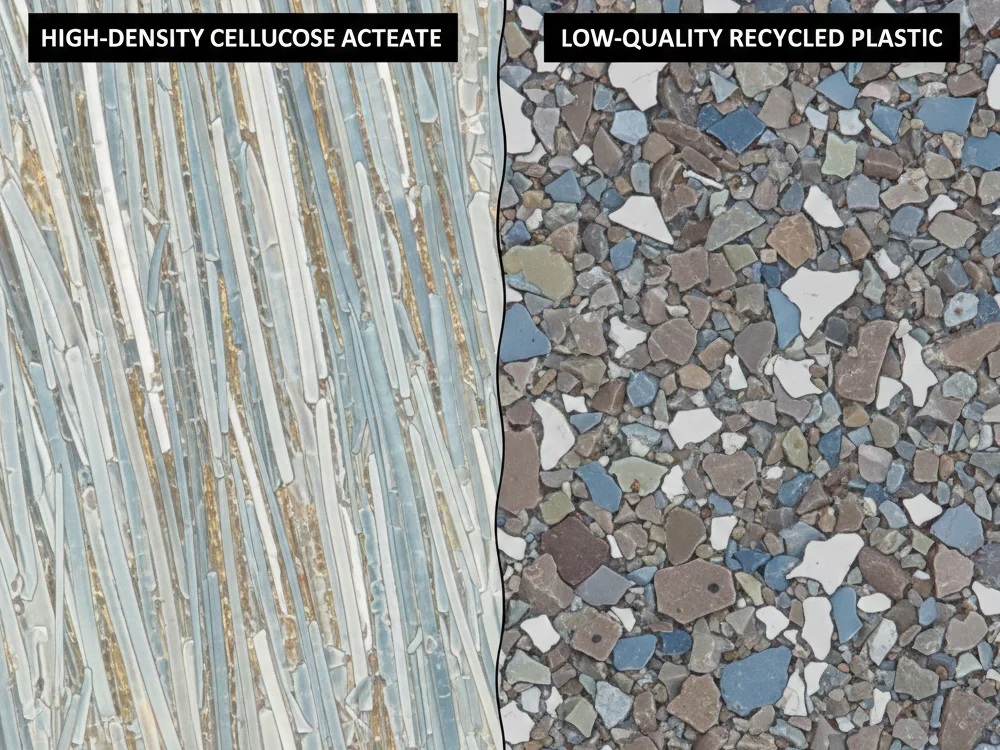
1.1 Cellulose Acetate vs. Injected Plastics
Premium acetate is a non-petroleum based plastic made from cotton and wood fibers. High-quality acetate frames undergo a “curing” process. In cheap manufacturing, acetate sheets are used too quickly, leading to “shrinkage” or warping months after the customer buys them. At Alfoptical, our acetate is aged for a minimum of 6 weeks to ensure dimensional stability.
The Test: Smell the frame. Low-quality acetate often has a pungent chemical odor (residual acetic acid), whereas high-quality, properly cured acetate is virtually odorless and has a deep, integrated color luster that won’t fade.
1.2 The TR90 (Grilamid) Standard
Authentic TR90 is the gold standard for sports eyewear. It is a Swiss-developed material known for its “memory” property. Many suppliers substitute this with cheaper Polycarbonate (PC) or CP (Cellulose Propionate). While PC is impact-resistant, it lacks the extreme flexibility of TR90.
The Test: Attempt a “cold bend” on the temple. Authentic TR90 can be bent nearly 90 degrees and will snap back to its original position instantly. If you see white stress marks at the bend point, the material is an inferior blend.
II. Optical Physics: Precision in Lens Manufacturing
Lenses are the most critical component for eye safety. As a leading wholesale sunglasses supplier, we categorize lens quality by three factors: Material, Coating, and Curve Consistency.
2.1 Abbe Value and Visual Clarity
The Abbe value defines how much light is dispersed when passing through a lens. A low Abbe value causes “color fringing” or blurred edges in the peripheral vision.
- Nylon Lenses: Abbe value ~52 (Highest clarity, used in luxury brands).
- Polycarbonate: Abbe value ~30 (High impact, but lower clarity).
- TAC Polarized: Excellent for glare but must be multi-layered for stability.
2.2 Polarization Efficiency (PE) Standards
For B2B buyers in the fishing or driving niche, PE is everything. A high-quality polarized lens must have a PE of 99% or higher. Lower-grade lenses (often found in $1-2 wholesale units) use a thin film that is unevenly stretched, leading to “blind spots” in the polarization filter.
The Technical Check: Use a digital screen or a professional polarized tester. Rotate the lens 90 degrees; it should turn completely opaque. If you see “light leaks” or purple tints, the filter is poorly aligned.
III. Mechanical Engineering: The “Hinge and Hardware” Audit
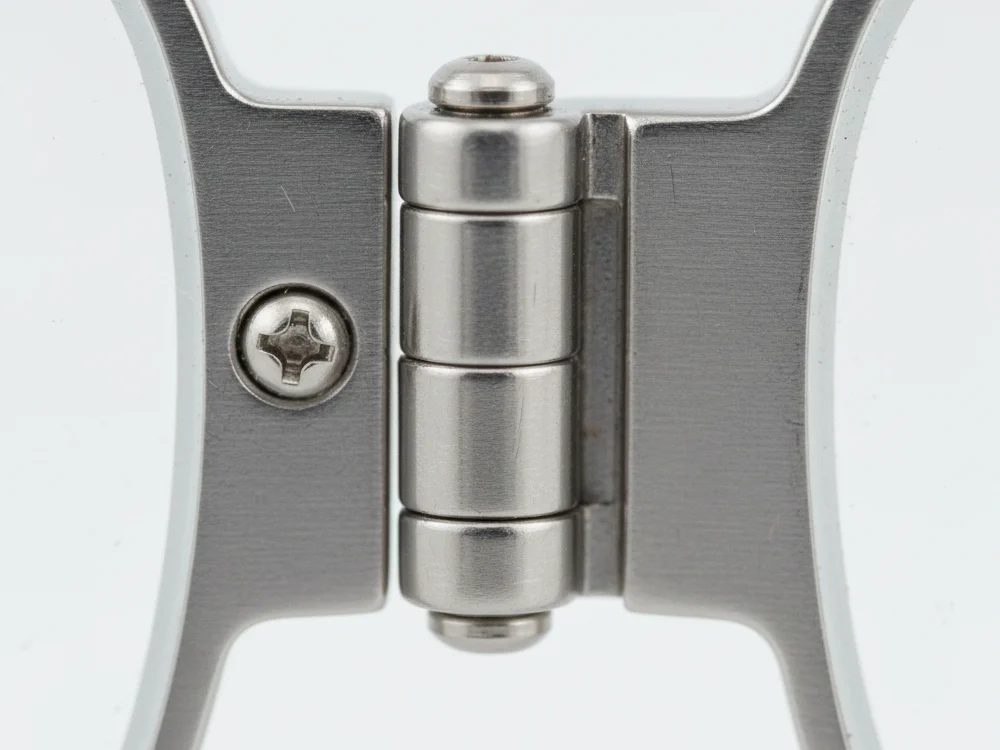
If the material is the body, the hardware is the joints. This is where most consumer complaints originate.
| Component | Premium (Tier 1) | Budget (Tier 3) |
|---|---|---|
| Hinge Construction | Monoblock 5-7 Barrel (Integrated) | Glued or single-screw pinned |
| Screw Quality | Teflon-coated / Anti-loosening | Raw stainless steel or zinc |
| Temple Core | Nickel-silver or Stainless Steel | No core or soft aluminum |
| Nose Pad Arm | Titanium or Alpha-Beta Alloy | Standard brittle copper |
IV. The “Expert Audit” Laboratory Testing
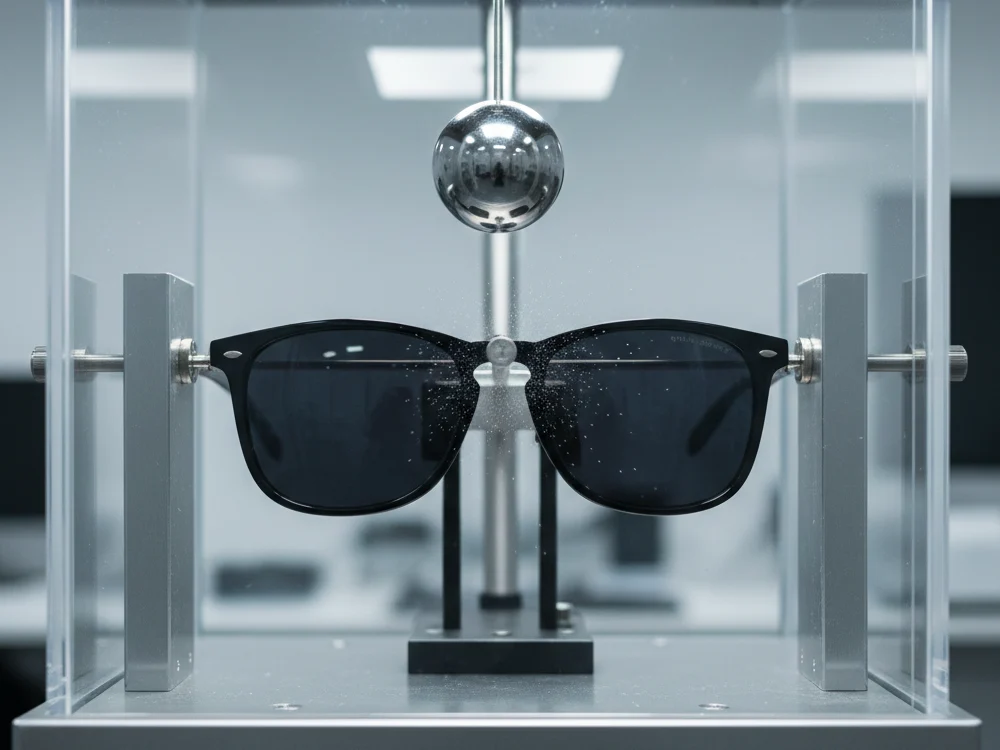
A high-quality manufacturer should provide test reports for the following:
4.1 Impact Resistance (FDA 21 CFR 801.410)
For the US market, every lens must pass the “Drop Ball Test.” A 16.2g steel ball is dropped from a height of 127cm. Cheap lenses will shatter into needle-like shards; high-quality lenses (especially PC and Nylon) will remain intact or crack without shattering.
4.2 Sweat and Corrosion Resistance (ISO 12870)
Environmental durability is key. We subject our frames to a 48-hour salt spray test. If the plating bubbles or the hinges stiffen, the product fails. This is crucial for coastal markets or high-intensity sports brands.
4.3 Nickel Release Standards
For metal frames entering Europe, compliance with REACH (Nickel Release) is mandatory. High-quality suppliers use palladium or gold plating layers to prevent skin irritation.
V. Hand-Finishing: The Human Factor
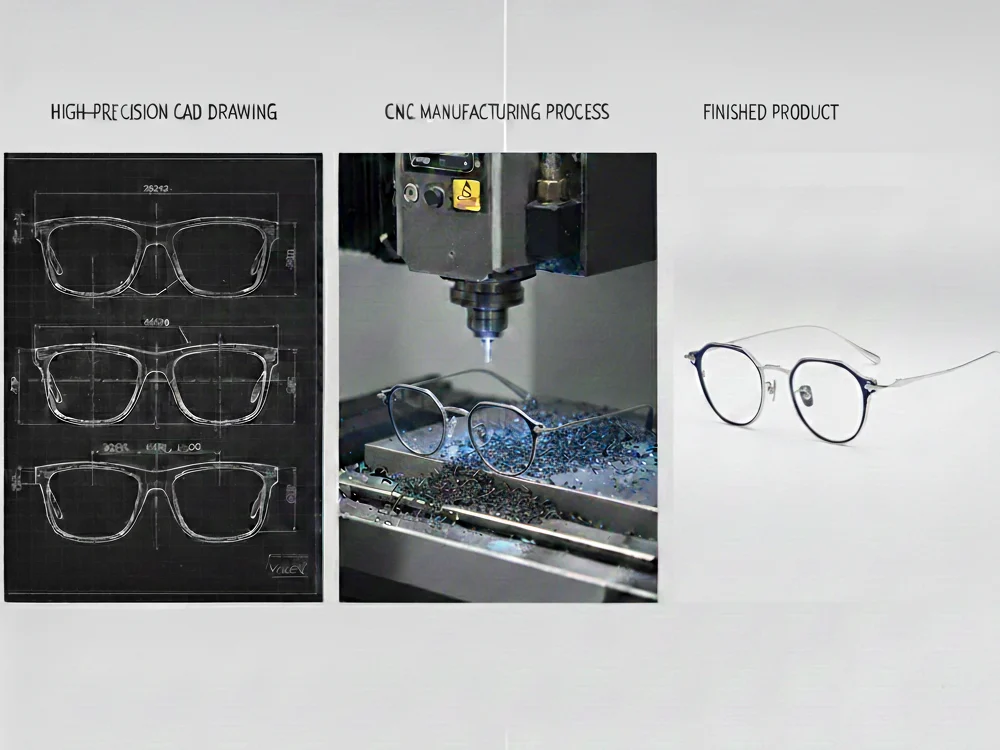
While CNC machines provide the cut, the Alfoptical finishing process relies on human touch for the final 5% of quality.
- Beveling: Run your finger along the inner edge of the frame. It should feel “rolled” and smooth. Sharp edges indicate a rushed tumbling cycle.
- Symmetry Calibration: Lay the glasses on a flat surface. If the temples “wobble,” the frame is not calibrated. Quality manufacturers perform a “4-point touch” test on every unit.
- Inlay Precision: If the frame has metal decors or logos, they should be flush with the acetate. Any gap or “lip” will catch hair and collect dirt.
VI. The Hidden Cost of Low-Quality Wholesale
Many buyers prioritize low MOQ and low price, ignoring the **Total Cost of Ownership**. Low-quality eyewear results in:
- **High Return Rates:** Often exceeding 15% for budget-tier products.
- **Brand Dilution:** Bad reviews on Amazon or social media are permanent.
- **Legal Liability:** Failing an FDA or CE audit can lead to entire shipments being seized at customs.
Conclusion: Partnering with a Manufacturer, Not a Vendor
Identifying high-quality sunglasses requires a shift from looking at aesthetics to analyzing engineering. By auditing material density, lens Abbe values, and mechanical hinge integrity, you ensure your brand stands for excellence in a crowded 2026 market.
At Alfoptical, we invite you to audit our process. We provide full transparency into our eyewear manufacturing supply chain, offering the technical data you need to scale your brand with confidence.