If you’ve never done it before, importing sunglasses from China looks simple.
Find a supplier.
Confirm samples.
Place an order.
Book shipping.
But after years of working with overseas buyers, I can tell you this:
Most problems don’t happen in production.
They happen between quotation and arrival.
And usually, they show up as “unexpected costs.”
Let’s walk through what really matters.
The Hidden Costs of Importing Eyewear Most Buyers Don’t See
The first quotation you receive is never your total cost.
That’s where many new importers make mistakes.
The real number you need to calculate is your Total landed cost sunglasses — not the EXW or FOB price.
We’ve seen buyers surprised by:
- Unexpected packaging upgrades required by retailers
- Labeling compliance changes
- Inspection fees
- Bank transfer charges
- Rework costs due to unclear specifications
When people search for hidden costs of importing eyewear, they’re usually reacting to something that already went wrong.
The goal is to calculate it before that happens.
Understanding the Sunglasses HS Code 9004.10
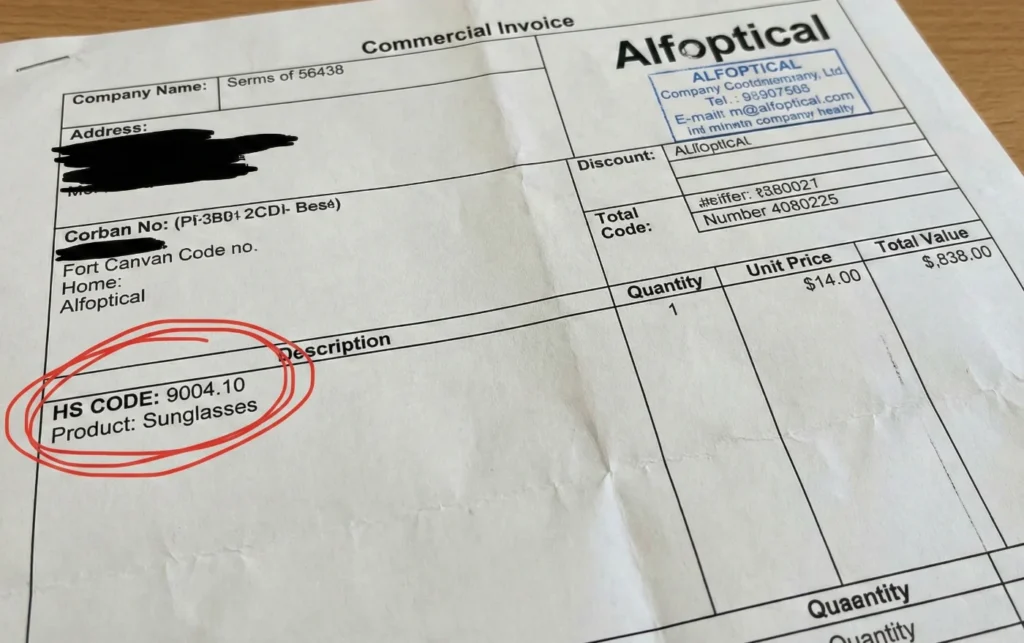
Customs classification is not optional.
For sunglasses, the standard international classification falls under:
Sunglasses HS Code 9004.10
This number affects:
- Import duties
- Customs declaration forms
- VAT calculation
- Documentation accuracy
If you use the wrong classification, delays happen.
If you want a full breakdown of the 🔗 HS Code for sunglasses, including regional duty differences, we’ve detailed it separately for buyers handling their own customs clearance.
Small mistake here, big delay later.
Wholesale Sunglasses MOQ Pricing: Why Volume Changes Everything
MOQ discussions are rarely about ego.
They’re about production efficiency.
When buyers ask about wholesale sunglasses MOQ pricing, they usually want flexibility.
Here’s the reality from the factory side:
- Acetate models require material batching
- TR90 models may require mold cost amortization
- Custom logo printing involves setup fees
Small quantities increase per-unit cost because production lines still need setup time.
If you’re evaluating your budget, understanding how 🔗 wholesale sunglasses MOQ and pricing works will help you avoid unrealistic expectations.
Volume doesn’t just lower price.
It stabilizes planning.
Volumetric Weight Eyewear Shipping: The Logistics Trap
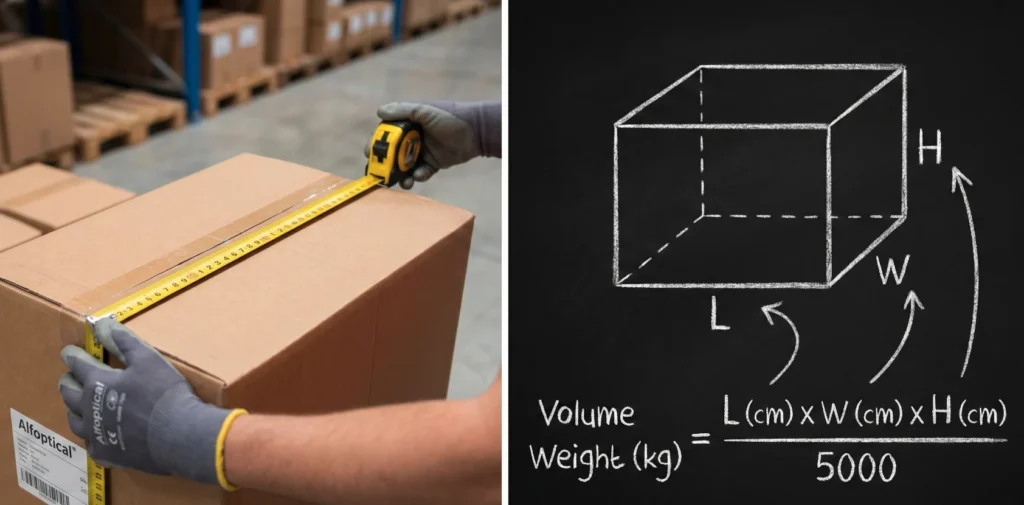
One thing first-time importers underestimate is volumetric weight eyewear shipping.
Sunglasses are lightweight.
But they take space.
Shipping companies calculate based on whichever is higher:
- Actual weight
- Volumetric weight
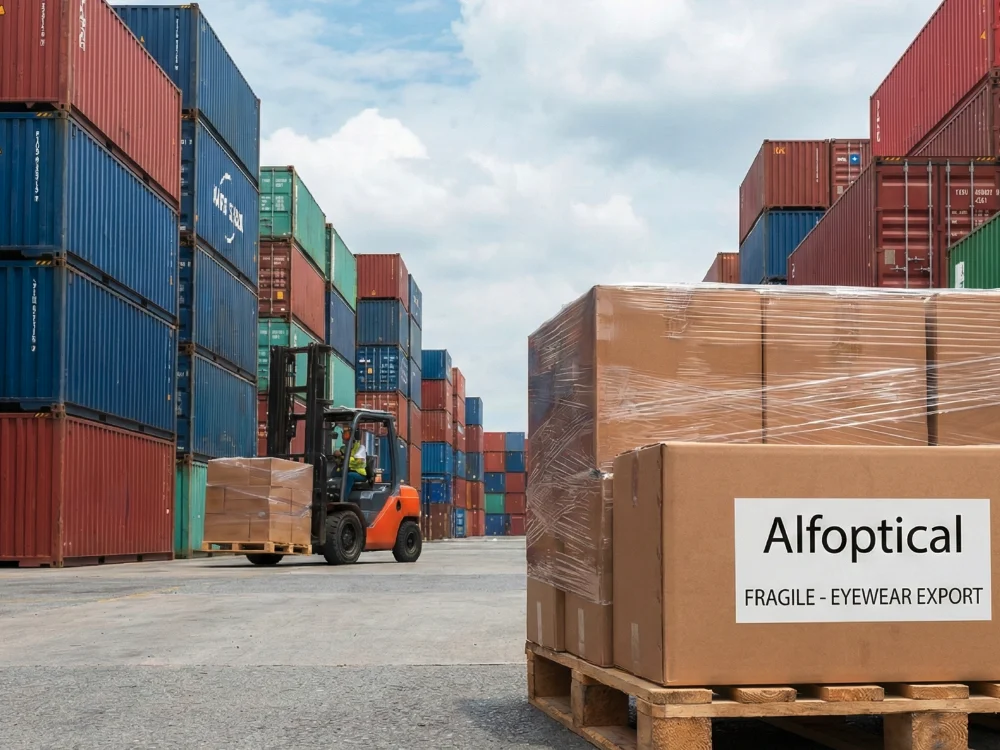
And eyewear packaging increases volume quickly — especially with retail boxes and protective cases.
We’ve seen buyers shocked when freight costs exceed product cost for small shipments.
Before confirming your order size, always ask your supplier:
- Carton dimensions
- Units per carton
- Estimated CBM
Logistics planning should start before production.
Not after.
Calculating the Total Landed Cost Sunglasses Buyers Should Really Focus On
The number that matters most is not your factory quote.
It’s your total landed cost sunglasses.
That includes:
- Unit price
- Tooling (if any)
- Packaging
- Inspection
- Freight
- Insurance
- Customs duty
- Local transport
- Warehouse handling
Serious buyers don’t compare suppliers by EXW price alone.
They compare by total outcome.
Sometimes a slightly higher factory price results in lower landed cost due to:
- Better packaging efficiency
- Fewer defects
- More stable documentation
Experience teaches that cheaper at the beginning can be expensive at the end.
Choosing the Right Sunglasses Manufacturer
There are thousands of suppliers.
But not all are real manufacturers.
Some are trading companies.
Some outsource production.
When evaluating a 🔗 sunglasses manufacturer, ask practical questions:
- Do they control tooling in-house?
- Can they explain material behavior clearly?
- Do they provide compliance documentation?
- Can they discuss packaging optimization?
More importantly — ask them to walk you through their 🔗 Sunglasses Manufacturing Process.
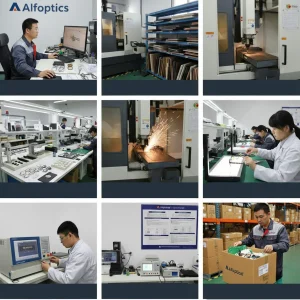
A supplier who can clearly explain each stage — from material sourcing to polishing, assembly, inspection, and packing — is far less likely to create surprises later.
A manufacturer who understands export logistics and production flow will save you more money than the lowest quote.
If You Plan to Import Sunglasses from China Regularly
If this is not a one-time order, your strategy changes.
When brands decide to 🔗 import sunglasses from China long-term, they usually:
- Standardize packaging dimensions
- Consolidate models for shipping efficiency
- Forecast demand to negotiate better MOQ
- Pre-plan HS documentation
The second order should always be smoother than the first.
If it isn’t, something in your system needs adjustment.
What Experienced Buyers Do Differently
After seeing hundreds of shipments leave our warehouse, the buyers who succeed long term usually:
- Ask detailed questions early
- Confirm documentation before mass production
- Understand freight structure
- Calculate margin based on landed cost, not factory price
- Build long-term partnerships instead of switching suppliers every order
Importing is not only about finding cheap production.
It’s about building a stable supply chain.
Frequently Asked Questions
Is importing sunglasses from China still profitable in 2026?
Yes, if you calculate total landed cost correctly and control logistics efficiency.
What is the correct HS Code for sunglasses?
Generally 9004.10, but always confirm with your local customs broker.
What is a typical MOQ for wholesale sunglasses?
It depends on material and customization, but volume directly affects pricing structure.
How do I reduce volumetric shipping cost?
Optimize packaging size and consolidate shipments when possible.
What’s the biggest mistake new importers make?
Focusing only on unit price instead of full supply chain cost.
Final Thoughts
Importing sunglasses from China is not complicated.
But it is layered.
The buyers who treat it as a strategic supply decision — not just a product purchase — usually see the best results.
If you understand HS codes, MOQ structure, volumetric weight, and landed cost before placing your order, you’re already ahead of most first-time importers.
And that’s usually the difference between a stressful first shipment — and a scalable business model.