
Materials & Technology: How We Build Sunglasses That Last
I’ve been on the factory floor for over a decade. What I’ve learned is this: sunglasses frame materials and lens technology are not just specs in a brochure—they decide whether a pair ends up loved or left in a drawer. Here’s a candid look at what we use, why, and the small stories that shaped our choices.
Every corner of the workshop has its own rhythm: the steady hum of CNC machines, the smell of acetate dust after sanding, the quick chatter of QC staff checking lens clarity under bright lamps. For outsiders, it may look chaotic. For us, it’s a language we’ve spoken for years—every sound, smell, and gesture tells us whether the product will stand the test of daily life.
Choosing Frame Materials Wisely
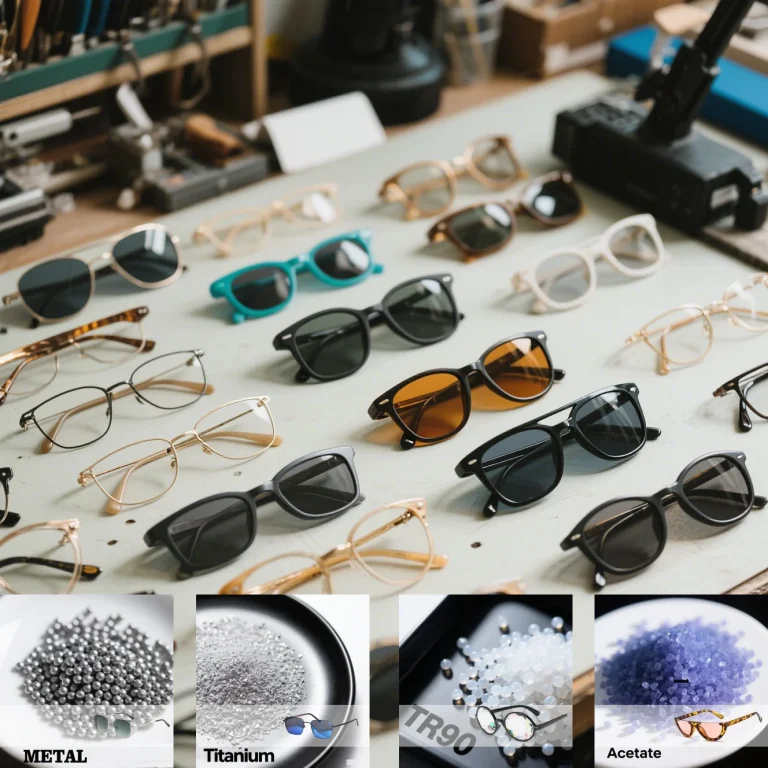
Acetate, TR‑90, stainless steel, titanium, bio‑based plastics—each comes with its own quirks. A buyer once told me, “Just give me the cheap one.” Six months later, their frames warped in summer heat, and we never heard from them again. Materials set the tone for brand reputation.
Sometimes the smallest decision, like the grade of TR‑90 pellets, determines whether a brand thrives or fails. I’ve seen labels sink because they underestimated how materials hold up in real life. On our eyeglasses manufacturing floor, we treat material selection like the backbone of every collection.
Acetate — Color, Depth, Personality
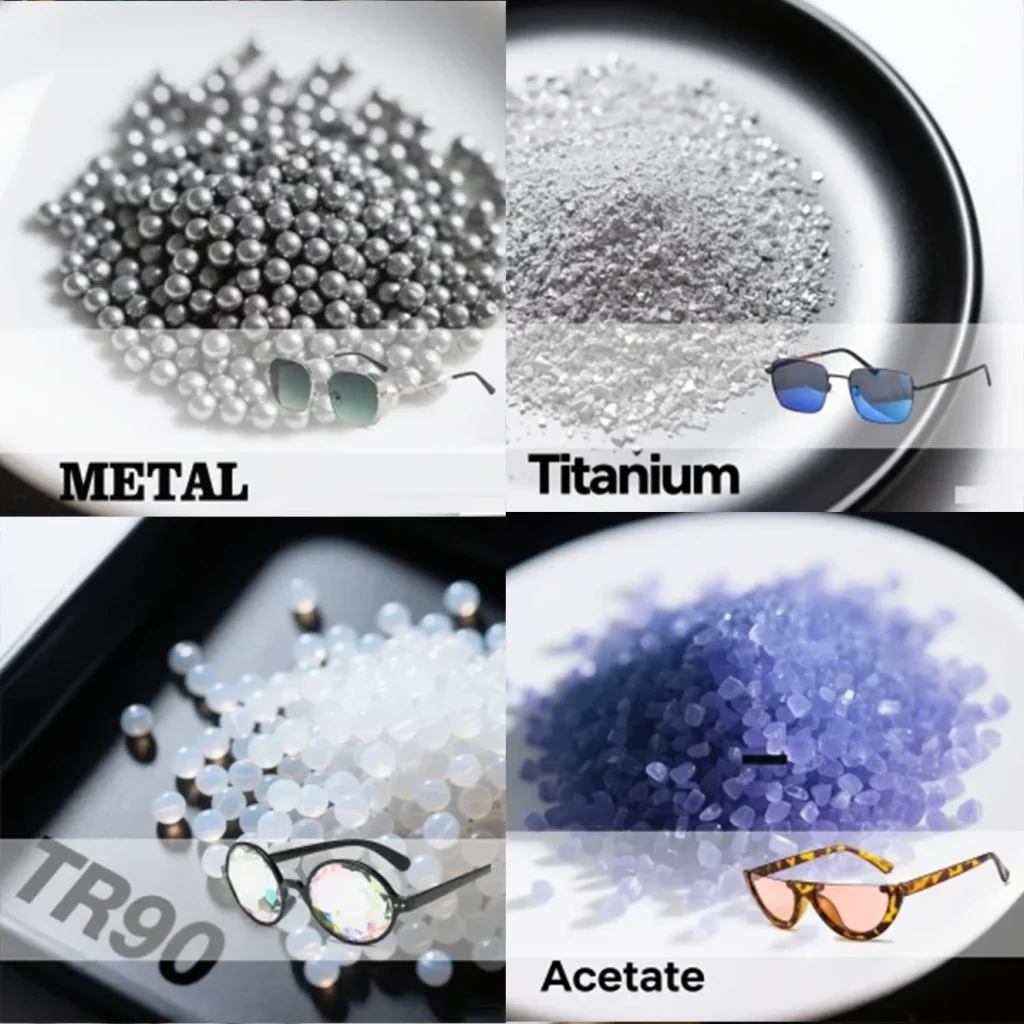
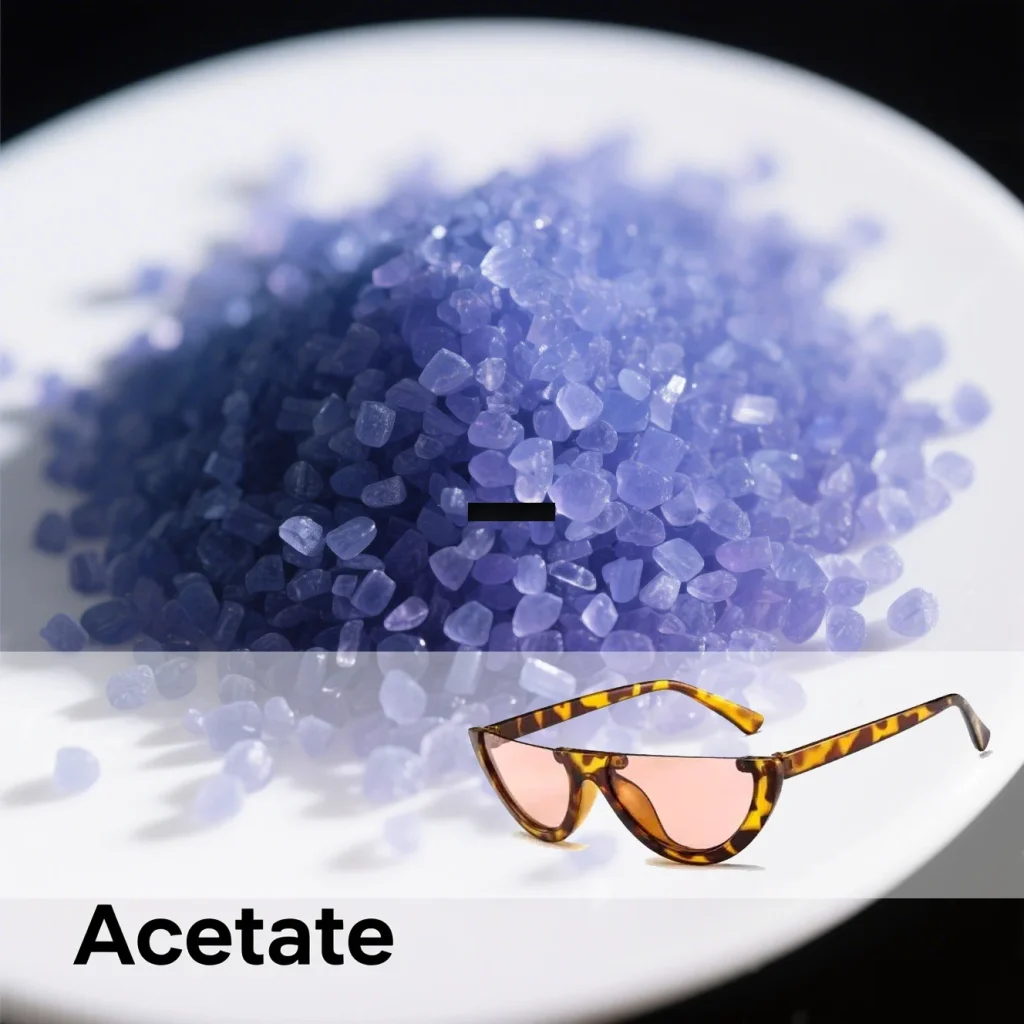
Designers love acetate because it carries colors with depth. We’ve produced frames with twelve‑layer gradients—each sheet pressed, rested, then cut. I remember an Italian client who insisted on a tortoise pattern with just the right amber streaks. We scrapped three early runs before getting it right. The payoff? They sold out the first season.
Working with acetate is like cooking a complex meal—it requires patience, control of temperature, and a respect for timing. Too hot, and the sheet bubbles. Too cold, and it cracks when cut. These lessons aren’t written in manuals; they come from long nights when a machine operator stays behind to redo a batch because he doesn’t want his name attached to bad work.
TR‑90 — Light and Tough
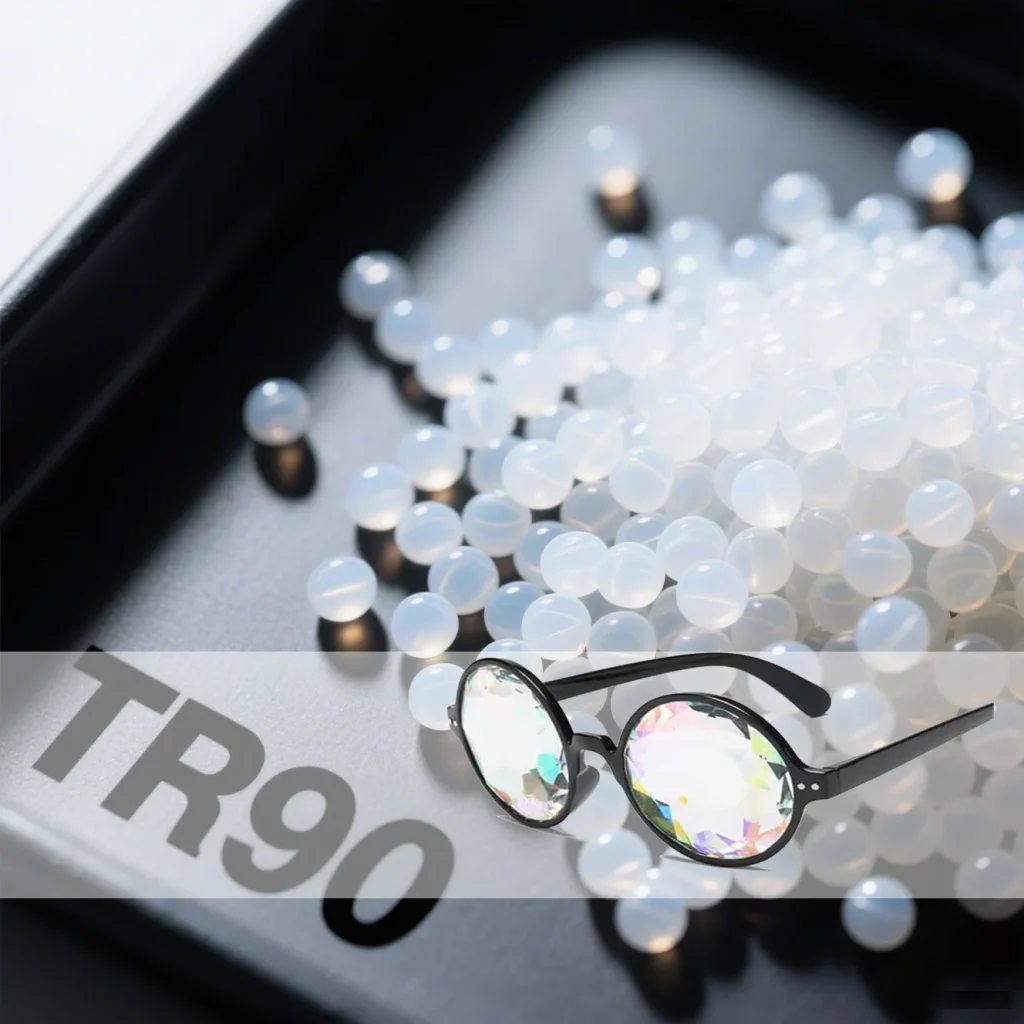
TR‑90 is our go‑to for sports sunglasses. It bends without breaking, resists heat, and feels light on the face. Once, a cycling team tested our prototypes during a crash simulation. The helmets cracked, the TR‑90 frames flexed, and the lenses popped out without shattering. That day confirmed why TR‑90 dominates performance eyewear.
Another memory that sticks with me is a late‑night QC session with a shipment bound for Germany. We bent each frame over and over again, sometimes until our fingers cramped. The point wasn’t to break them—it was to learn where they resisted, where they gave, and where they failed. That kind of hands‑on testing is what separates a good supplier from a forgettable one.
Metals — Strength and Precision
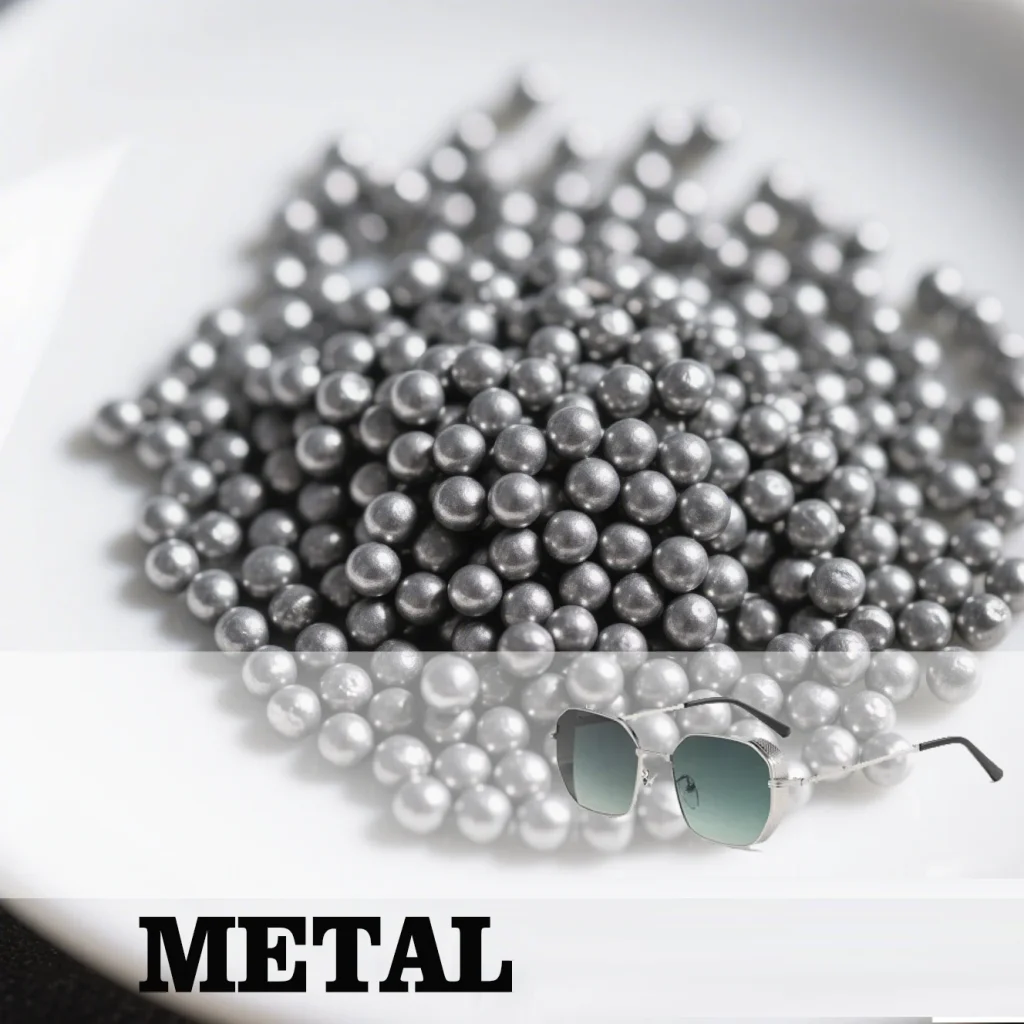
Metal frames—whether stainless steel or titanium—carry a premium look. But they’re unforgiving in production. A plating error once turned a batch yellow overnight. We had to re‑plate and delay shipping by two weeks. Lesson learned: metal elevates a collection, but only if the process is nailed down.
Precision is everything. I’ve seen apprentices polish a hinge joint half a millimeter too much, and suddenly the screw doesn’t bite. When you hold a metal frame in your hands, it may look simple, but what you’re holding is hours of silent labor, and the pride of workers who know that one wrong move can waste an entire lot.
Eco & Bio-Based Alternatives
Clients from Scandinavia to California now ask about bio‑acetate or recycled TR. We once worked with a small Nordic brand that insisted on 100% bio‑based frames. The brittleness gave us headaches, but after adjusting curing times, the final frames passed stress tests. Going green isn’t always easy, but it’s where the market is headed.
One thing I admire about eco‑focused clients is their persistence. They know the risks and still push forward. In one case, we even partnered with a local recycling facility to collect acetate scraps and remold them into test frames. Were they perfect? No. But they taught us that sustainability isn’t a single decision—it’s a practice, built day by day.


Lens Technologies That Matter
The core: polarized lens technology. It cuts glare off water and asphalt, a must for athletes and drivers. Add photochromic layers for changing light, mirror coatings for fashion and brightness, AR coatings to kill reflections, and hard coats to fight scratches. We once attempted a triple combo—polarized + photochromic + mirror—for a Japanese distributor. Three rounds of sampling later, it worked. Sometimes persistence is the real technology.
I still remember the first time I looked through a properly polarized lens. It was during a fishing trip organized by a client. The glare vanished, and for a moment, I felt like the world slowed down. That experience taught me that eyewear isn’t just about manufacturing specs—it’s about moments of clarity in real life.
Making Frames and Lenses Work Together
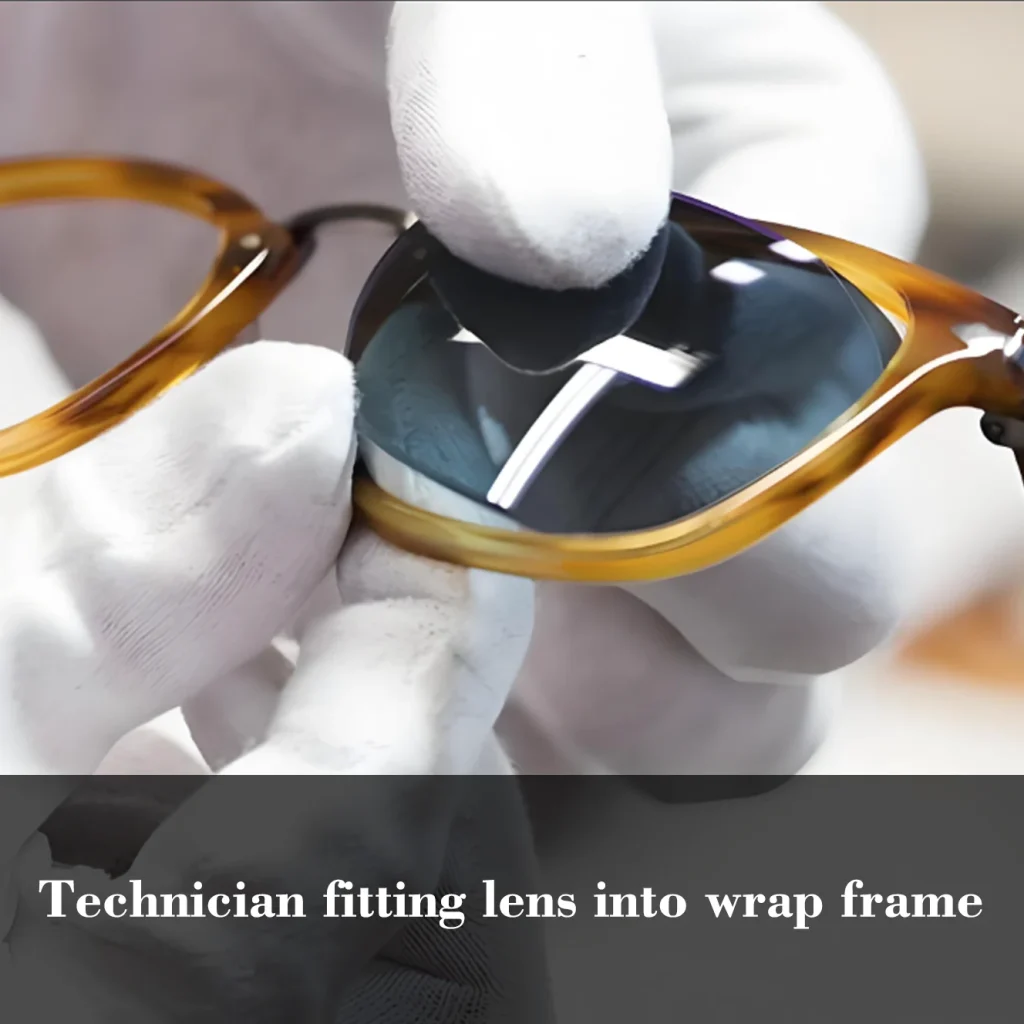
A perfect lens can fail if the frame doesn’t fit. Wrap frames at 8‑base curvature, for example, distort high prescriptions. I once argued with a buyer who wanted −7.00D lenses in such a frame. We showed him the distortion charts and convinced him to adjust the design. Better to lose one style than disappoint a thousand users.
Integration is like choreography. If the frame curve, lens thickness, and coating layers don’t dance together, the result looks good on paper but fails on the face. That’s why we spend hours with optical maps, not because charts are beautiful, but because they save customers from headaches—literally.
Processes Behind the Finish
Injection molding, CNC cutting, hand polishing—every method has its place. Luxury acetate often needs hand‑polishing for depth, while big OEM runs rely on molding for scale. I remember one hot stamping job where the logo came out crooked on half the batch. We scrapped it and reinvested in better alignment jigs. Technology is only as good as its consistency.
When I train new staff, I tell them: don’t just watch the machines, listen to them. A polishing wheel makes a different sound when the angle is off by a degree. It’s not science you find in a textbook—it’s craft passed from one worker to another, whispered across shifts.
Standards and Testing
ANSI Z80.3, ISO 12312‑1, CE, FDA—these aren’t just acronyms. They’re barriers between safe eyewear and liability. We once had a client spot a 0.2mm thickness gap against EN specs. Embarrassing, but it pushed us to double‑check every lot with digital calipers and impact tests. If you want to dive deeper, check ISO Sunglasses Standard.
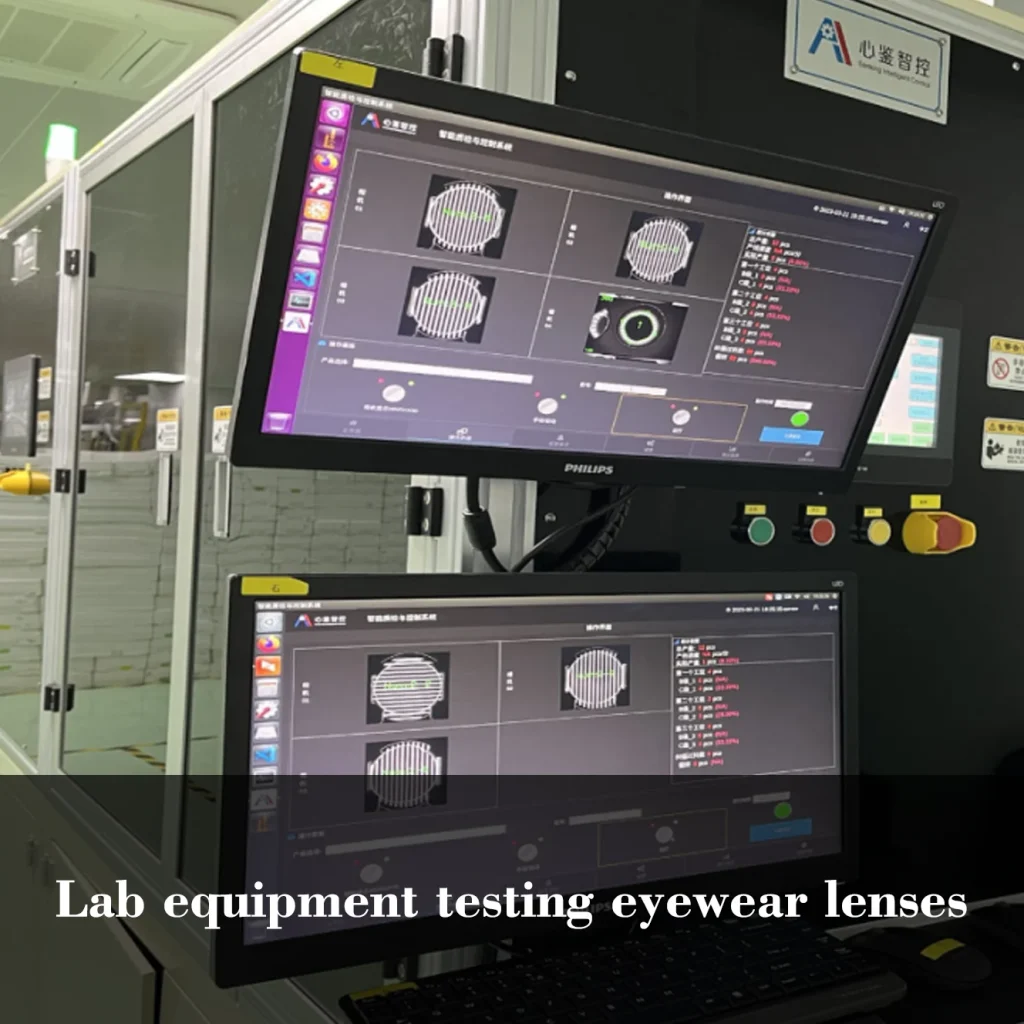
Testing is where the factory turns humble. Machines don’t care about excuses. Drop ball tests, UV filtering checks, adhesion pulls—if a frame or lens fails, the machine doesn’t lie. I’ve watched seasoned technicians smile when a batch passes all marks. It’s not relief, it’s pride—the kind that builds over years of doing things right.

The Future of Materials & Tech
The future is lighter, greener, and smarter. Eco‑materials are moving mainstream, AR HUD lenses are no longer sci‑fi, and small batch CNC lets startups act fast. For us, the core remains the same: don’t chase hype, chase reliability. Because at the end of the day, eyewear is about trust on someone’s face.
What excites me most is the mix of tradition and innovation. I still see workers polishing acetate by hand, the same way they did twenty years ago. Right next to them, a new machine runs AI‑driven inspections on polarized lenses. That blend—that handshake between old and new—is what keeps this industry alive and personal.
FAQ — Materials & Technology
What’s the difference between acetate and TR‑90?
Acetate offers rich colors and premium feel, TR‑90 is lightweight and impact‑resistant. We often recommend acetate for fashion lines and TR‑90 for performance eyewear.
Can polarized lenses be combined with photochromic?
Yes, but it’s tricky. We’ve done it—requires multiple sampling rounds to balance response speed and clarity.
Does MOQ affect material choice?
Absolutely. Small runs suit acetate (flexible colors, hand finish), while large OEM runs benefit from TR‑90 molding for cost efficiency.
Discuss Your Materials & Tech Needs
Whether you want acetate artistry, TR‑90 toughness, or cutting‑edge polarized lens technology, our team can help you make the right call. Let’s build sunglasses that don’t just look good but perform for years.